
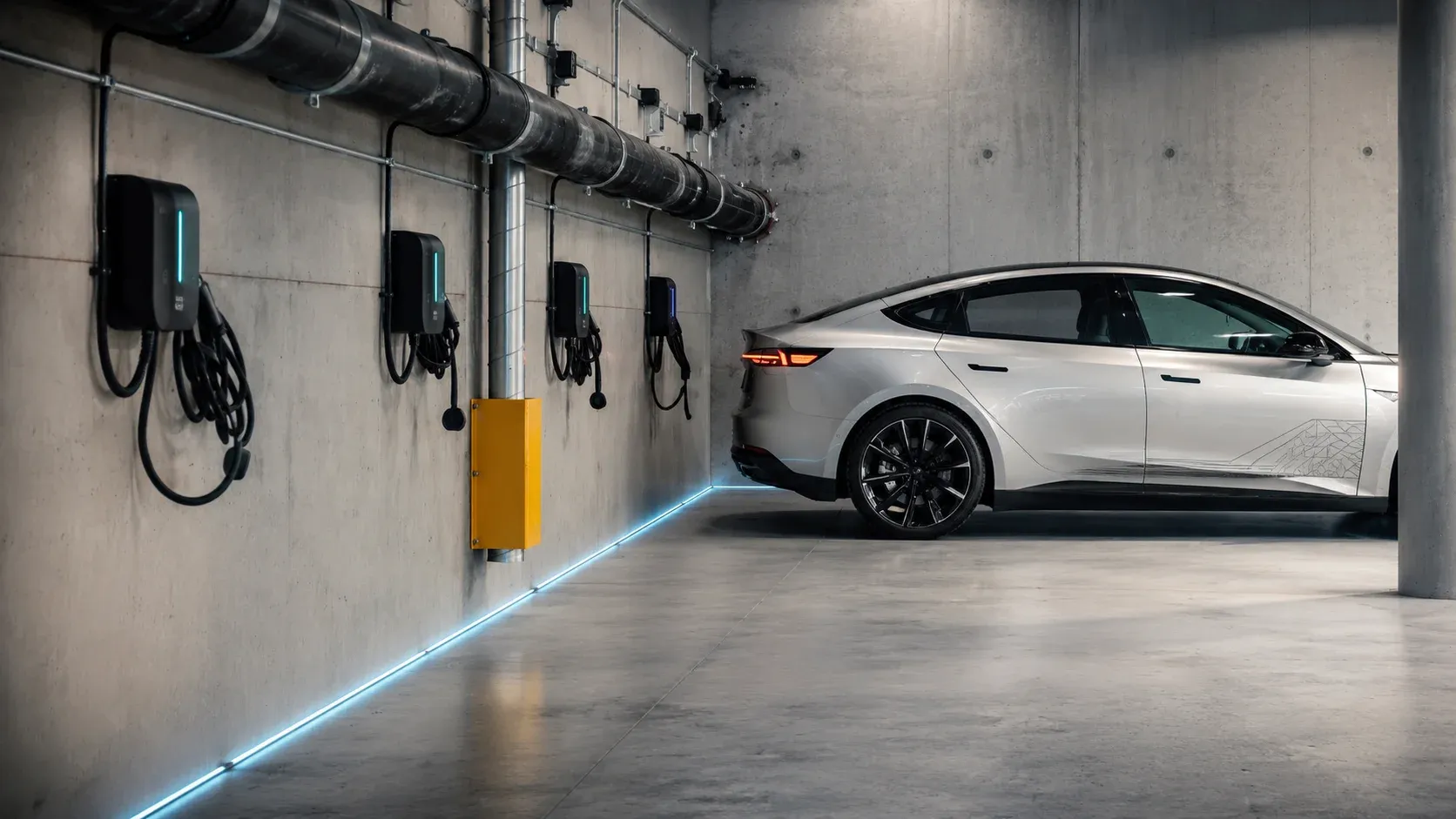
AMP IT, a Geneva-based energy and mobility company, has completed a new funding round to expand its private EV charging infrastructure and software platform across Switzerland and into European markets. The round, backed by the Swiss Technology Fund, brings total funding to €7 million since the company's 2021 founding. The capital will support operational scaling, software development, and market expansion into selected European regions.
Charging as a Service Model
AMP IT operates a fully integrated platform combining physical charging infrastructure with proprietary software called AMP IT Hub. The company develops, finances, installs, and operates smart charging systems for residential buildings, commercial real estate, and corporate fleets. Rather than selling hardware alone, AMP IT delivers a subscription-based service that bundles infrastructure, energy management, and billing into a single offering—a model that shifts capital and operational risk from property owners to the platform operator.
Software-Driven Energy Optimization
AMP IT Hub enables real-time monitoring and AI-powered charging scheduling that dynamically prioritizes local renewable energy sources and manages demand patterns. The system's intelligent algorithms optimize energy usage to reduce costs while maintaining reliable charging availability. This demand-side management capability addresses a practical constraint for grid operators: uncoordinated EV charging can create peak-load spikes that strain distribution networks. By scheduling charges during periods of lower demand or higher renewable availability, the platform helps flatten load curves—a consideration for utilities managing grid stability as EV adoption accelerates.
Market Traction and Expansion Strategy
Since launch, AMP IT has achieved double- to triple-digit annual revenue growth with a development pipeline exceeding 15,000 charging points. Switzerland remains the company's core market, but the expansion strategy targets high-potential European regions, particularly the Nordics and Southern Europe. The timing reflects market conditions: rising fuel price volatility is expected to accelerate EV adoption in these markets, creating demand for charging infrastructure and energy management solutions.
Strategic Implications for Infrastructure Investors
The funding announcement signals investor confidence in the private charging-as-a-service model as a viable path to EV infrastructure deployment without relying solely on public investment. For energy executives and utilities, the integration of software-driven demand management into charging infrastructure represents a shift toward active grid participation rather than passive load addition. For industrial and commercial real estate operators, the subscription model transfers installation and maintenance risk to the platform provider while enabling cost optimization through intelligent energy scheduling.
Key Takeaways
- AMP IT has raised €7 million to scale private EV charging infrastructure and software across Switzerland and European markets, with a pipeline exceeding 15,000 charging points.
- The company's AI-powered scheduling system prioritizes renewable energy sources and manages demand to reduce costs and support grid stability—a practical consideration as EV adoption accelerates.
- The charging-as-a-service model bundles infrastructure, software, and energy management into a subscription offering, shifting capital and operational responsibility from property owners to the platform operator.
- Expansion targets the Nordics and Southern Europe, where rising fuel volatility is expected to drive EV adoption and demand for integrated charging solutions.
EnergyInsyte's Take
AMP IT's funding round reflects growing market recognition that EV charging infrastructure requires integrated software and energy management to deliver economic and grid-stability benefits. For decision-makers evaluating charging deployment strategies, the company's focus on demand-side optimization and renewable prioritization addresses practical constraints that uncoordinated charging creates. As EV adoption accelerates across Europe, the ability to manage charging as an active grid resource—rather than passive load—will become increasingly valuable to utilities and grid operators managing reliability and cost.
Source: Businesswire