
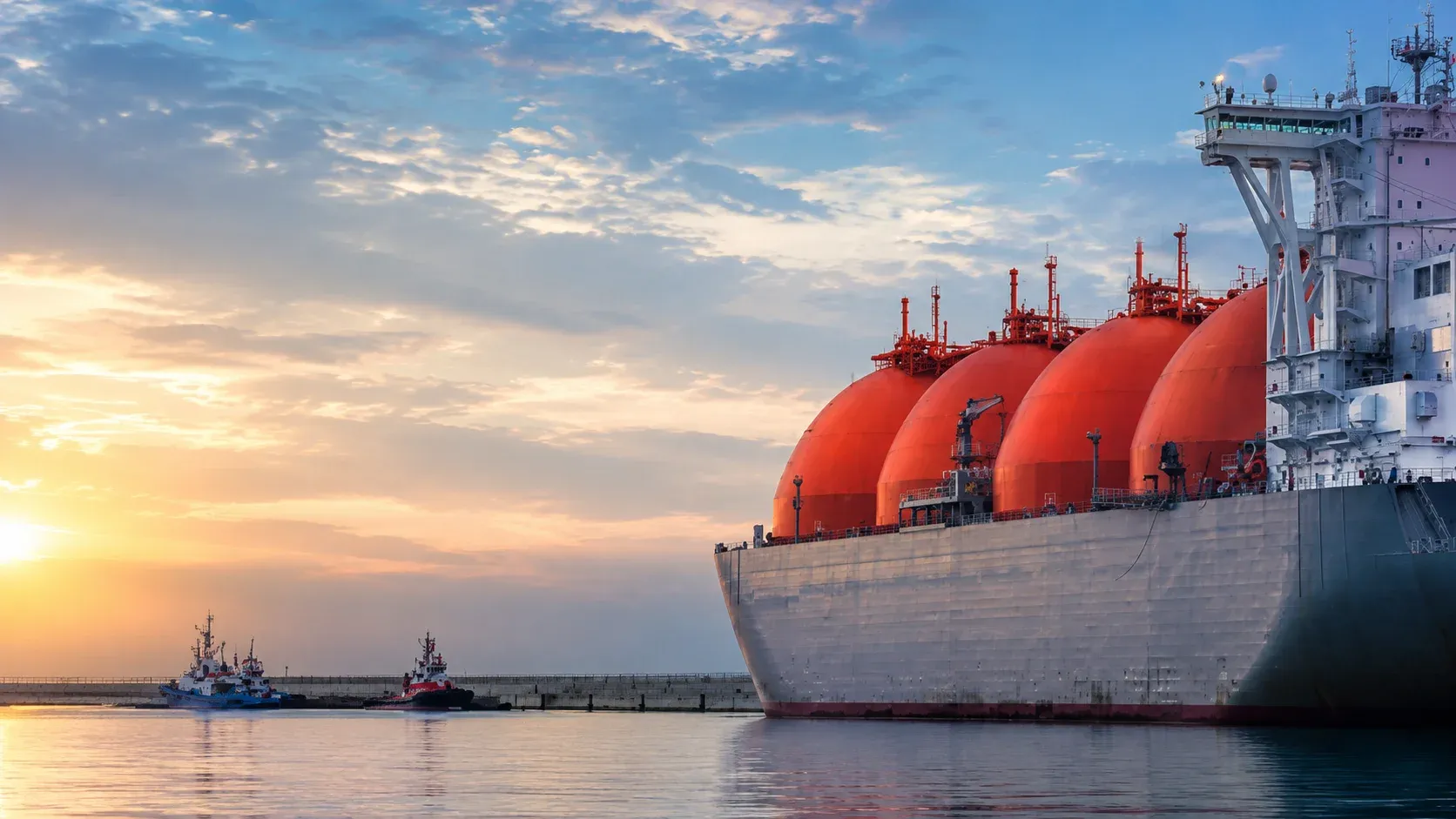
The U.S. Energy Information Administration expects U.S. natural gas exports to grow strongly through 2027, mainly because new LNG export projects are coming online and pipeline exports to Mexico are increasing. In its latest Short-Term Energy Outlook, EIA forecasts net U.S. natural gas exports will rise 18% to 18.7 billion cubic feet per day in 2026, then increase another 10% to 20.5 Bcf/d in 2027.
This matters because U.S. natural gas is becoming more important to global energy security. LNG allows gas to move across oceans to markets that cannot be reached by pipeline. As Europe, Asia, and other import-dependent regions manage energy security risks, U.S. LNG is playing a larger role in balancing supply.
EIA expects U.S. LNG exports to rise by 1.9 Bcf/d in 2026, reaching an average of 17.0 Bcf/d, and then grow by another 9%, or 1.5 Bcf/d, in 2027. Pipeline exports are also expected to increase, growing by 4% in 2026 and 2% in 2027.
The forecast is closely tied to new LNG capacity. EIA expects five LNG export projects to start operations and ramp up by the end of 2027. These include Corpus Christi Stage 3, Golden Pass LNG, Port Arthur LNG Phase 1, Rio Grande LNG Trains 1 and 2, and the final train of Golden Pass. Together, these projects will expand the United States’ ability to serve international gas markets.
The U.S. already has a large LNG export base. EIA says current U.S. peak export capacity is 18.3 Bcf/d. In 2026, Corpus Christi Stage 3 is expected to start up trains 5–7, adding 0.6 Bcf/d, while Golden Pass LNG is expected to start its first two trains, adding 1.4 Bcf/d. In 2027, Port Arthur LNG Phase 1, Rio Grande LNG Trains 1 and 2, and Golden Pass’ final train are expected to begin exports.
Europe remains a major destination for U.S. LNG. EIA says U.S. LNG exports to Europe reached a record 10.3 Bcf/d in 2025, up from 6.3 Bcf/d in 2024, and accounted for 68% of U.S. LNG export volumes. Exports to Italy and Poland rose fastest in Europe, while exports to Asia fell from 4.0 Bcf/d in 2024 to 2.5 Bcf/d in 2025.
Pipeline exports are another important part of the story. EIA expects U.S. pipeline exports to reach 9.8 Bcf/d in 2026 and 10.0 Bcf/d in 2027, driven mainly by Mexico’s growing natural gas demand. This growth is linked to power generation demand and the development of new LNG export facilities in Mexico that will use U.S.-origin pipeline gas.
For energy markets, the key message is that U.S. gas is becoming more deeply connected to global supply security. More LNG capacity gives the United States a larger role in helping buyers manage disruptions, diversify supply, and reduce dependence on single-source pipeline routes. At the same time, higher exports can also influence domestic gas markets by connecting U.S. production more closely to international demand.
EnergyInsyte Take
EIA’s forecast shows that U.S. natural gas exports are entering another growth phase. LNG capacity additions, stronger European demand, and rising pipeline exports to Mexico are making U.S. gas more important to global energy security. For EnergyInsyte readers, the takeaway is clear: natural gas remains a major bridge fuel in the global energy system, and U.S. LNG infrastructure is becoming one of its most strategic assets.
Source link: EIA