
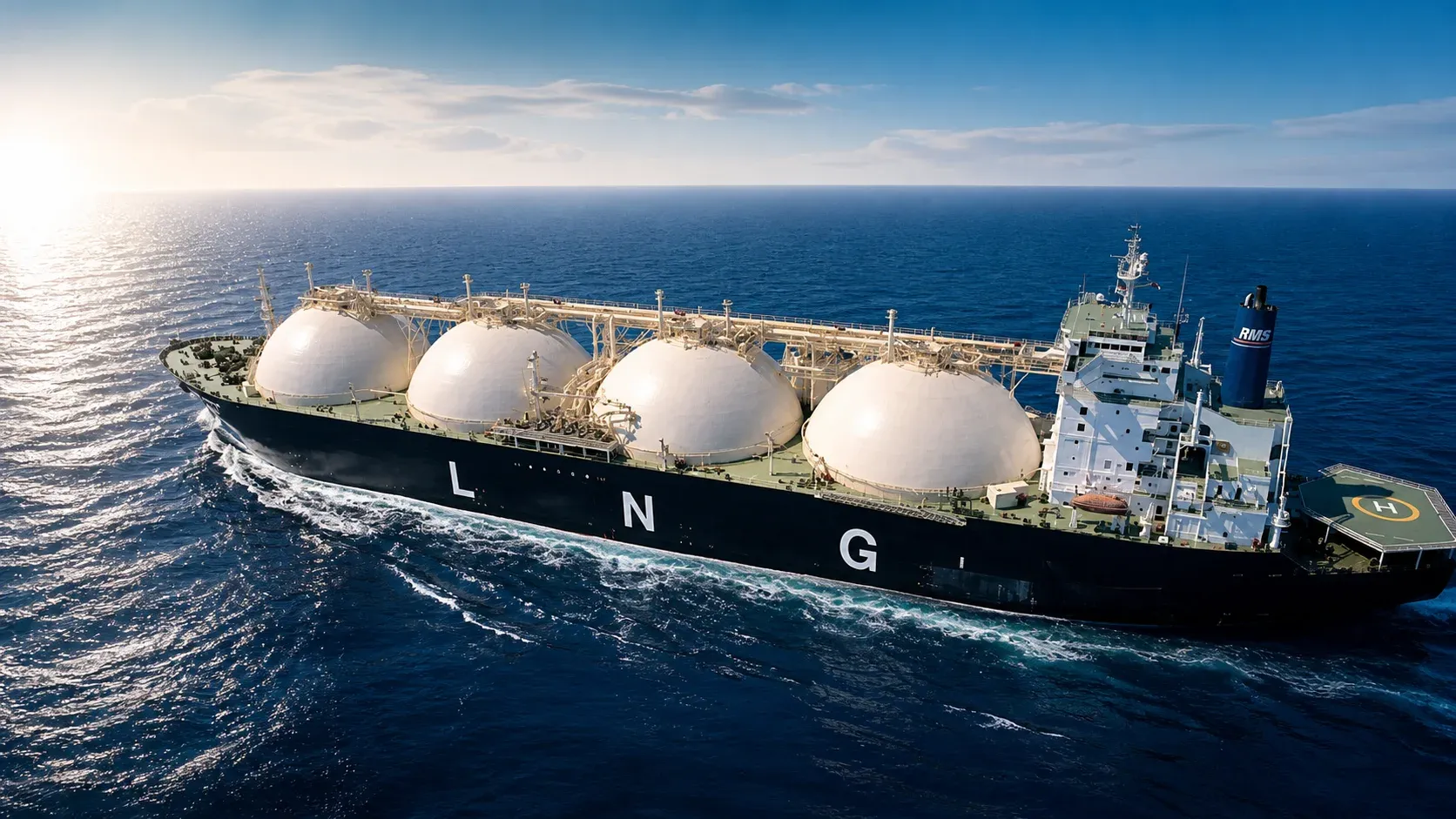
The global liquefied natural gas market entered 2026 expecting a major supply expansion. New projects in North America, Canada, and Africa were set to ease the tight conditions that followed the 2022 energy crisis and support stronger demand growth, especially in Asia.
The International Energy Agency said global LNG supply growth is set to accelerate in 2026 to its fastest pace since 2019. In its Q1 2026 Gas Market Report, the IEA forecast global LNG production growth of more than 7%, or over 40 bcm, with the United States, Canada, and Mexico accounting for more than 85% of the increase.
That makes LNG one of the most important energy market stories of 2026. It is not only about gas supply. It is about energy security, industrial competitiveness, Asian demand, European storage, and the future balance between renewables and firm power.
LNG Supply Is Recovering After Years of Tightness
Natural gas markets were tight for much of the period after Russia’s invasion of Ukraine. Europe had to replace large volumes of Russian pipeline gas, Asian buyers faced higher spot prices, and import-dependent economies became more exposed to volatility.
By late 2025, that pressure had started to ease. The IEA said global LNG production increased by almost 7%, or 38 bcm, in 2025, with around three-quarters of that growth concentrated in the second half of the year. The Plaquemines LNG plant in Louisiana accounted for more than 60% of the increase in LNG supply through the year.
That late-2025 momentum set the stage for stronger supply growth in 2026.
Reuters reported in January that global LNG output could rise to as much as 484 million tons in 2026, easing constraints seen since the Ukraine war and potentially dampening prices.
Asia Is the Main Demand Engine
The biggest demand story is Asia.
The IEA expects easing LNG supply fundamentals to support stronger global gas demand growth in 2026, primarily driven by China and emerging Asian markets. It forecast natural gas demand in the Asia Pacific region to rise by 4% in 2026, accounting for around half of global gas demand growth.
Reuters also reported that Asia’s 2026 LNG demand could rise by as much as 7%, led by China and India.
This matters because price-sensitive Asian buyers were often squeezed during tight LNG markets. If supply growth lowers spot prices, more buyers may return to LNG for power generation, industrial fuel, city gas, and energy security.
For India, LNG growth is tied to rising industrial activity, urban gas demand, and the need to diversify energy supply. For China, LNG demand depends on industrial recovery, power-sector needs, domestic gas production, pipeline imports, and price competitiveness.
Europe Still Needs LNG, But Its Role Is Changing
Europe remains an important LNG buyer, but its demand profile is different.
The IEA expects European gas demand to decline by 2% in 2026 as renewables continue to expand.
At the same time, Europe still needs LNG to maintain storage levels and replace Russian pipeline gas. Reuters reported that Europe’s LNG imports are being driven by storage needs and higher gas consumption.
This creates a more flexible but still vulnerable European gas market. Europe may consume less gas over time, but it remains deeply connected to global LNG price swings because LNG is now a major balancing fuel.
Geopolitical Risk Is the Wild Card
The LNG supply expansion story became more complicated in April 2026.
The IEA’s Q2 2026 Gas Market Report said the outlook had been significantly altered by conflict in the Middle East, including disruptions to shipping through the Strait of Hormuz and attacks on regional energy infrastructure. The agency said the effective closure of the strait caused the loss of nearly 20% of global LNG supply, distorting short-term gas market fundamentals.
This caveat is critical.
The underlying LNG supply wave remains important, but geopolitical shocks can delay the easing of market balances. LNG is globally traded, flexible, and increasingly important, but it is not immune to chokepoints, infrastructure damage, or shipping disruption.
That is why LNG markets in 2026 should be viewed through two lenses at once: structural supply growth and short-term volatility.
What This Means for B2B Energy Buyers
For industrial energy buyers, LNG supply growth could improve optionality. Lower or more stable LNG prices can help power producers, fertilizer companies, steelmakers, chemical firms, and city gas distributors.
But buyers should not assume a smooth market.
Procurement teams need to manage price volatility, shipping risk, contract exposure, and regional supply constraints. Long-term contracts may become attractive for energy security, while spot market flexibility may help buyers benefit from oversupply periods.
For LNG producers and traders, the opportunity is equally complex. More supply means more competition. Buyers may gain leverage. Portfolio flexibility, destination rights, shipping access, and risk management will matter more.
The Business Takeaway
LNG is becoming one of the central balancing fuels of the global energy system.
The expected 2026 supply expansion could ease tight markets and support demand growth in Asia. But geopolitical disruption shows that LNG security depends not only on production capacity, but also on shipping routes, infrastructure resilience, and regional stability.
For EnergyInsyte readers, the key insight is this: LNG is no longer just a fuel trade. It is a strategic infrastructure market connecting energy security, industrial competitiveness, and geopolitical risk.
The LNG wave is arriving, but it is sailing through choppy water.
FAQ
Why is LNG supply expected to grow in 2026?
New LNG projects, especially in North America, are increasing global production. The IEA expects 2026 LNG supply growth to be the fastest since 2019.
Which regions are driving LNG demand growth?
China and emerging Asian markets are expected to be the main drivers of stronger gas demand growth in 2026.
What could disrupt the LNG supply expansion?
Geopolitical risks, especially disruptions around major shipping routes such as the Strait of Hormuz, can distort supply and delay market easing.
Source Pack
- IEA Gas Market Report Q1 2026: use for LNG supply growth, 2026 gas demand forecasts, Asia demand, North America supply contribution, and market rebalancing.
- Reuters: use for the headline market angle that global LNG supply could rise to as much as 484 million tons in 2026, with demand growth led by China and India.
- IEA Gas Market Report Q2 2026: use for the important caveat that Middle East conflict and Strait of Hormuz disruptions have altered short-term fundamentals and delayed part of the LNG supply wave.