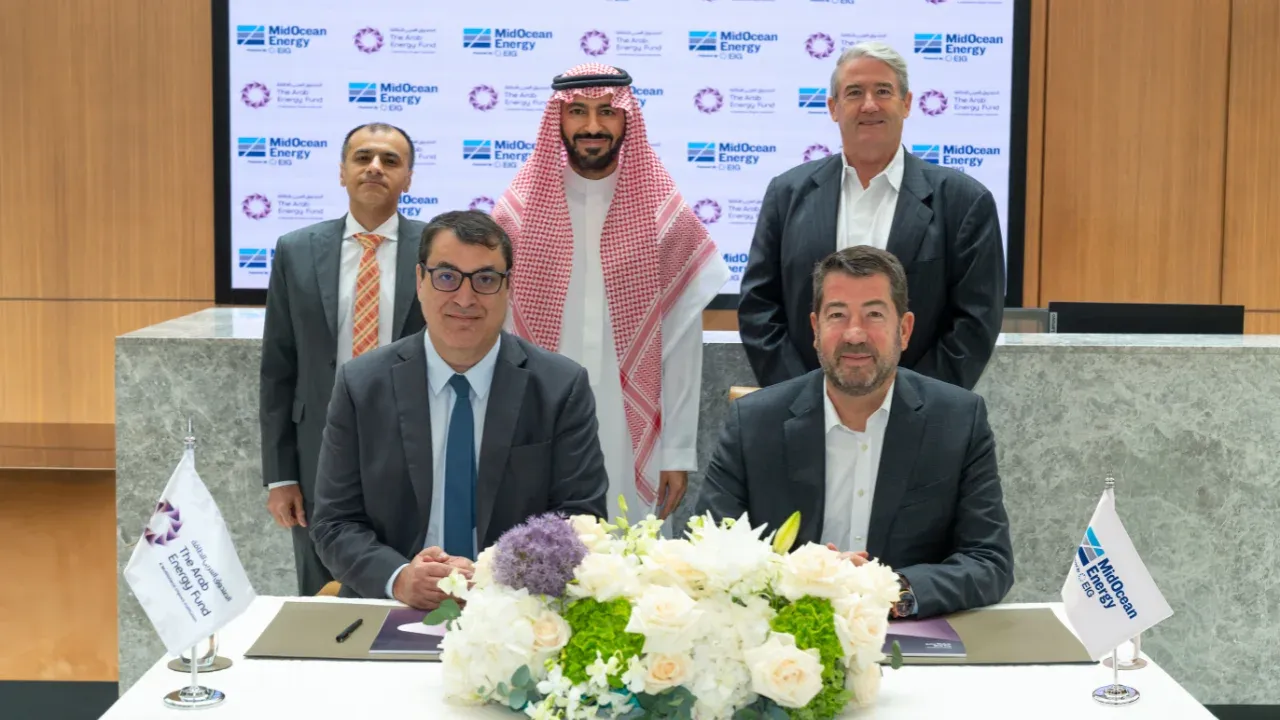
MidOcean Energy, the LNG platform managed by private‑equity firm EIG, announced a $120 million equity injection from The Arab Energy Fund (TAEF). The funding is part of a broader equity raise that targets up to $2 billion from new investors. Executives highlighted the investment as validation of MidOcean’s diversified, long‑life LNG strategy and noted potential collaboration on energy infrastructure in the Middle East.
What Happened
MidOcean Energy disclosed that TAEF, a multilateral impact financial institution, has committed $120 million in equity to the company. The investment joins an ongoing capital raise that aims to secure a cumulative $2 billion from additional investors, with several parties already in documentation. MidOcean Chairman and EIG CEO R. Blair Thomas welcomed TAEF as a shareholder, citing the fund’s expertise in energy investments. MidOcean CEO De la Rey Venter said the capital supports the company’s plan to build a diversified LNG portfolio. TAEF CEO Khalid Al‑Ruwaigh framed the investment as consistent with the fund’s focus on energy security and a more sustainable energy mix, emphasizing LNG’s role as a reliable, flexible source.
Project or Policy Context
MidOcean, formed and managed by EIG, seeks to assemble a global LNG portfolio that is cost‑ and carbon‑competitive. Its current asset interests include LNG Canada, Gorgon LNG (Australia), Pluto LNG (U.S.), QCLNG (Qatar), and Peru LNG. The company’s strategy aligns with EIG’s broader belief that LNG is a critical component of a lower‑carbon, secure energy system. TAEF, established in 1974 by ten Arab oil‑exporting states, provides debt and equity solutions across the MENA energy value chain and applies ESG principles to roughly 20 % of its $5.8 billion loan portfolio.
Market Relevance
The $120 million equity stake underscores continued investor appetite for LNG projects despite broader market volatility. By attracting a multilateral fund with a strong regional presence, MidOcean may gain access to financing channels and partnership opportunities in the Middle East—a region actively expanding its gas infrastructure to meet growing domestic demand and export ambitions. The broader $2 billion target suggests MidOcean is positioning itself to capture upcoming LNG contracts and to fund development or acquisition opportunities across its asset base.
Infrastructure Impact
MidOcean’s diversified holdings span five continents, providing a hedge against regional supply‑chain disruptions and regulatory shifts. The new capital could be deployed to advance project development, secure long‑term offtake agreements, or enhance downstream infrastructure such as regasification terminals. Collaboration between EIG and TAEF may also generate joint initiatives in MENA, potentially accelerating gas‑to‑power projects, LNG import terminal construction, or retrofits that improve carbon efficiency. For utilities and industrial buyers, a stronger MidOcean balance sheet may translate into more reliable supply contracts and pricing stability.
Key Takeaways
- MidOcean Energy received a $120 million equity investment from The Arab Energy Fund, part of a larger equity raise targeting up to $2 billion.
- The investment adds a multilateral MENA‑focused investor to MidOcean’s shareholder base, potentially opening collaboration on Middle‑East energy infrastructure.
- MidOcean’s asset portfolio includes LNG projects in Canada, Australia, the United States, Qatar, and Peru, positioning it to meet diversified demand and mitigate regional risks.
EnergyInsyte's Take
The infusion of capital from TAEF signals that LNG platforms with global, diversified assets continue to attract strategic financing, even as the sector navigates a transition toward lower‑carbon fuels. For energy executives, the partnership suggests that MidOcean may be better equipped to secure long‑term contracts and to explore joint infrastructure projects in the Middle East—an area where gas demand is projected to rise. Decision‑makers should monitor MidOcean’s progress in closing the remaining equity commitments, as the ultimate $2 billion raise will determine the scale of its development pipeline. Additionally, the extent of any concrete collaboration between EIG, TAEF, and regional partners remains unclear, leaving some uncertainty around the timing and scope of potential MENA projects.
Source: Businesswire