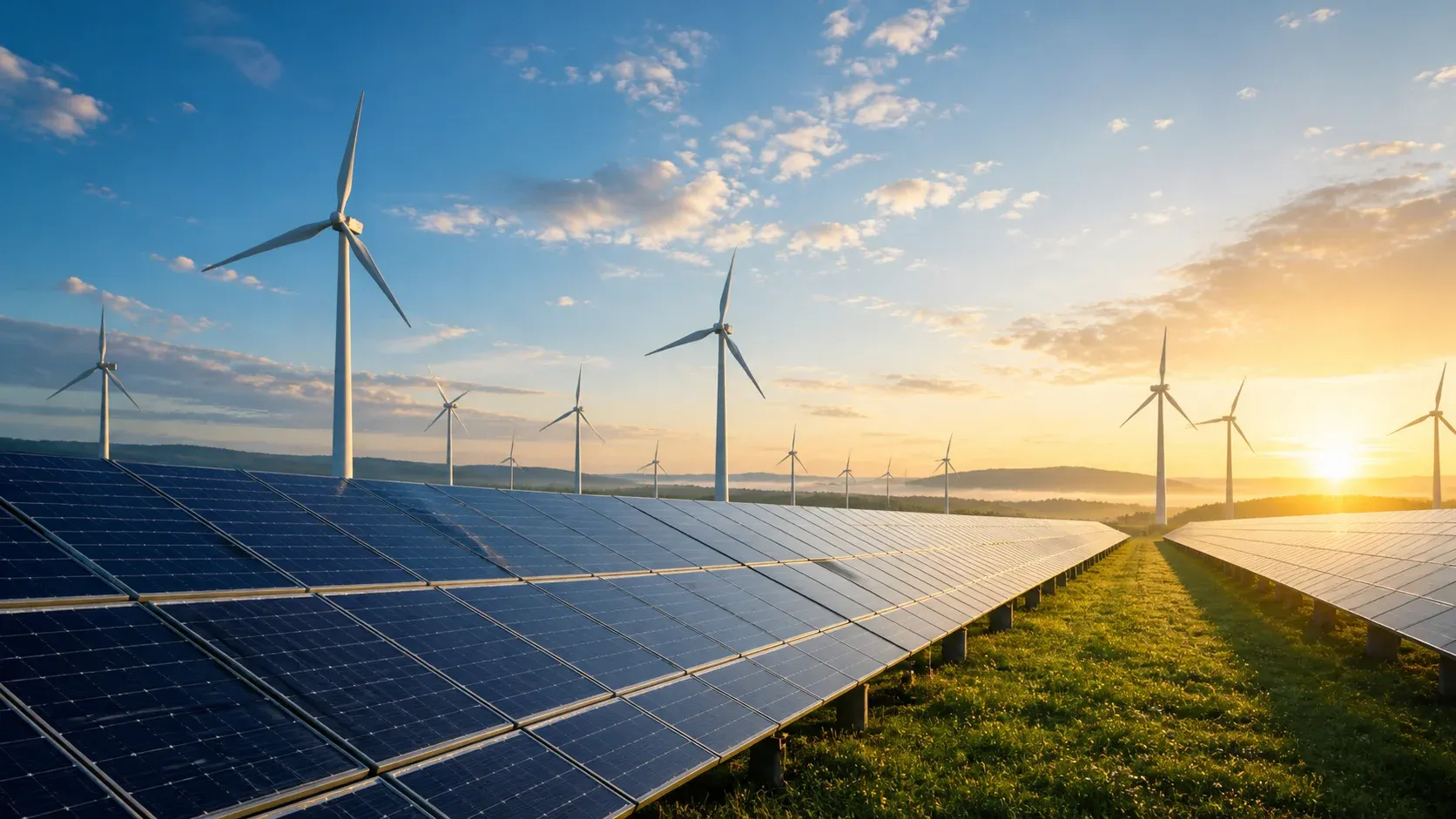
The global electricity system has crossed a historic threshold. Renewable energy has overtaken coal as the world’s largest source of electricity generation, ending a century-long pattern in which coal dominated the power mix.
Ember’s Global Electricity Review 2026 found that renewables generated 33.8% of global electricity in 2025, ahead of coal at 33.0%. In energy terms, renewables produced about 10,730 TWh, compared with coal’s 10,476 TWh.
For the energy industry, this is more than a climate milestone. It signals a structural shift in how power systems are being built, financed, and operated.
Clean Power Met Global Demand Growth
One of the most important findings is that clean power growth was large enough to meet the entire increase in global electricity demand.
According to reporting on Ember’s review, clean generation rose by 887 TWh in 2025, slightly more than the 849 TWh increase in global electricity demand. As a result, fossil fuel-based generation declined by around 0.2%.
That detail matters because demand is still growing. The energy transition is not happening in a flat market. It is happening while electricity consumption rises because of industrial growth, electrification, cooling demand, electric vehicles, and data centers.
Solar Is Becoming the Center of the Power Buildout
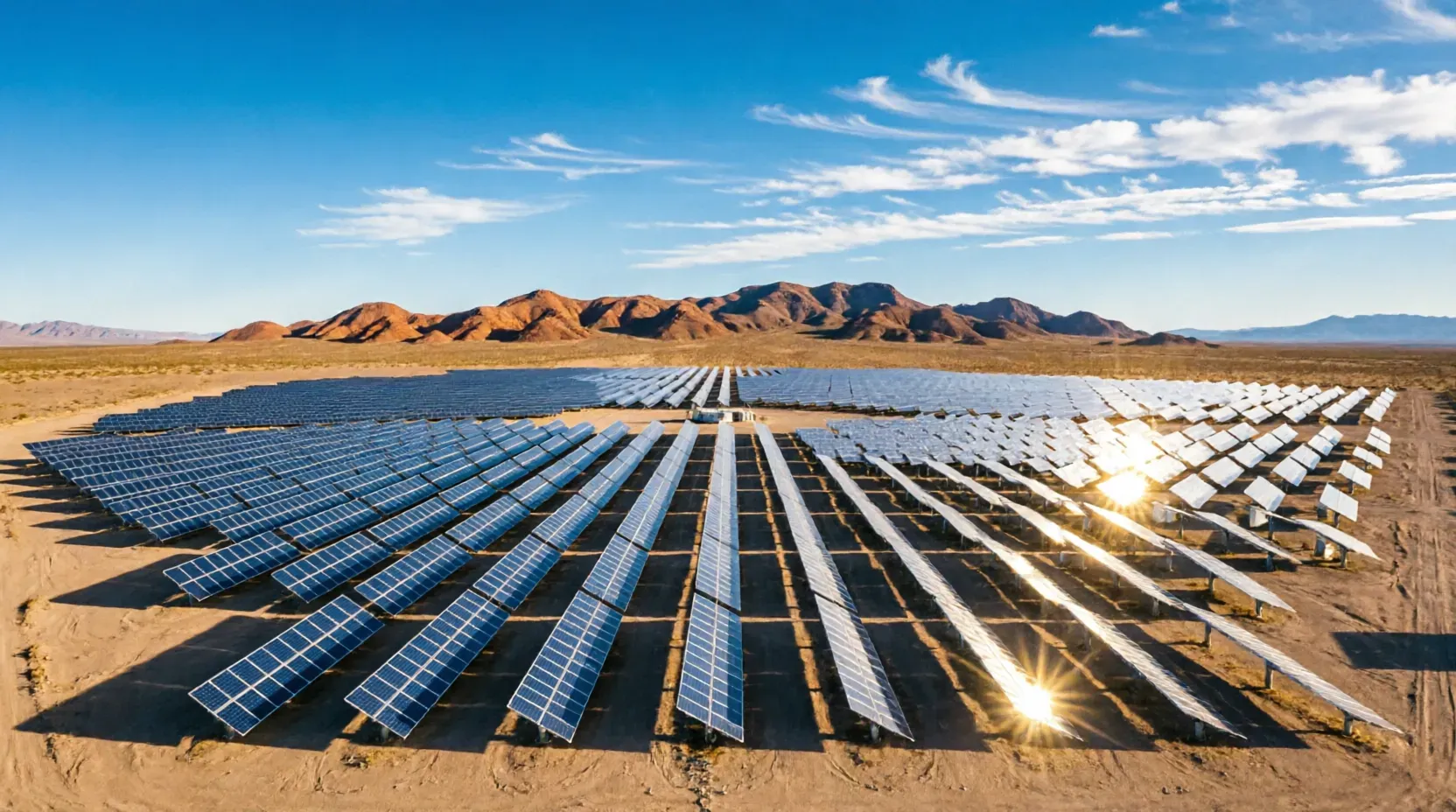
Solar was the standout growth engine. Ember’s review found that solar generation increased by a record 636 TWh to reach 2,778 TWh in 2025, a 30% increase from 2024. Solar alone met about 75% of the increase in global electricity demand, while wind and solar together met 99% of new demand.
For utilities, industrial buyers, and energy investors, this confirms solar’s role as the fastest-scaling source of new electricity. The market advantage is no longer only environmental. Solar is increasingly attractive because it can be deployed faster than many conventional power projects.
Coal Is Still Large, But Its Position Has Changed
Coal remains a major part of the global electricity system. A 33.0% share is still enormous. However, the direction of travel has changed.
Coal’s share has fallen below renewables, and its long-term dominance is weakening as solar, wind, hydro, and other renewable sources expand. For countries and companies dependent on coal-heavy grids, this creates both risk and opportunity.
The risk is stranded infrastructure. The opportunity is faster modernization of power systems, especially where renewable projects can be paired with storage, transmission upgrades, and flexible demand.
What This Means for B2B Energy Markets
For B2B energy users, this milestone has several implications.
First, renewable procurement will become more central to corporate energy strategy. Large industrial firms, data centers, and manufacturers will increasingly look for long-term renewable power contracts.
Second, grid investment becomes unavoidable. Renewable growth needs transmission capacity, storage, and smarter balancing systems. Without grid upgrades, renewable capacity can be built but not fully used.
Third, energy security is changing. Countries that can deploy domestic renewable power quickly may reduce exposure to imported fuel volatility.
The Business Takeaway
Renewables overtaking coal is not the end of fossil fuels. It is the beginning of a new competitive phase in global power.
The winners will be companies and countries that understand the full system challenge: generation, grid capacity, storage, financing, and demand flexibility. Solar and wind are now scaling fast enough to reshape the electricity market, but infrastructure will decide how much of that clean power can actually be delivered.
For B2B energy leaders, the message is clear: the energy transition is no longer a future scenario. It is now part of the operating environment.
FAQ
Did renewables really overtake coal globally?
Yes. Ember’s Global Electricity Review 2026 reported that renewables generated 33.8% of global electricity in 2025, ahead of coal at 33.0%.
What drove the shift?
Solar and wind growth were the main drivers, with solar alone meeting about 75% of new electricity demand in 2025.
Does this mean coal is no longer important?
No. Coal remains a major power source, but renewables have overtaken it in global share for the first time in over a century.
Sources
1.Ember