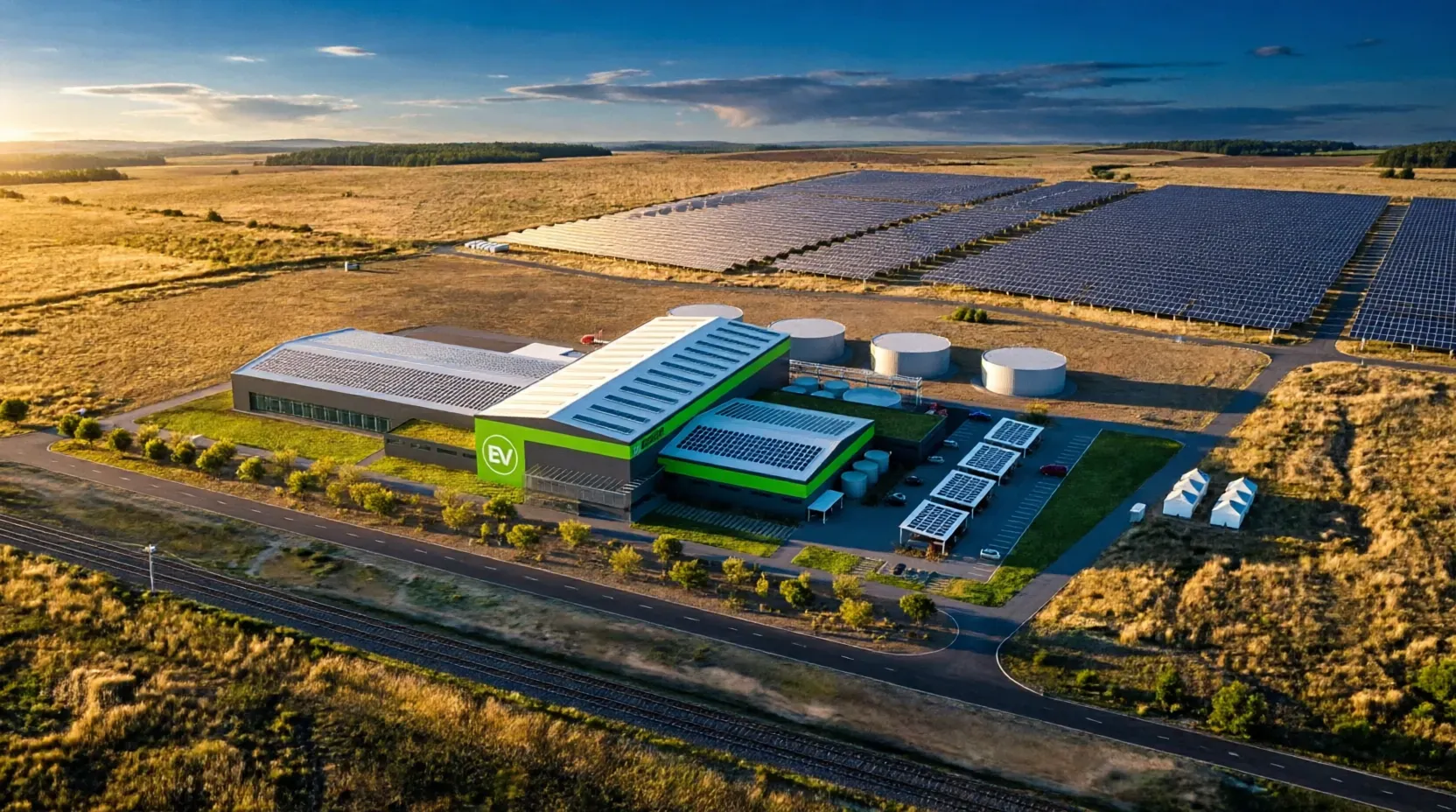
EVelution Energy LLC announced that construction has started on a 28‑megawatt solar array in Yuma County, Arizona. The array will supply all electricity for the company’s planned commercial‑scale cobalt metal and cobalt sulfate processing facility, the first of its kind in the United States. The milestone is relevant to utilities, grid planners, and industrial buyers seeking domestic critical‑minerals supply and renewable‑energy integration.
Solar Array Construction Kicks Off in Yuma County
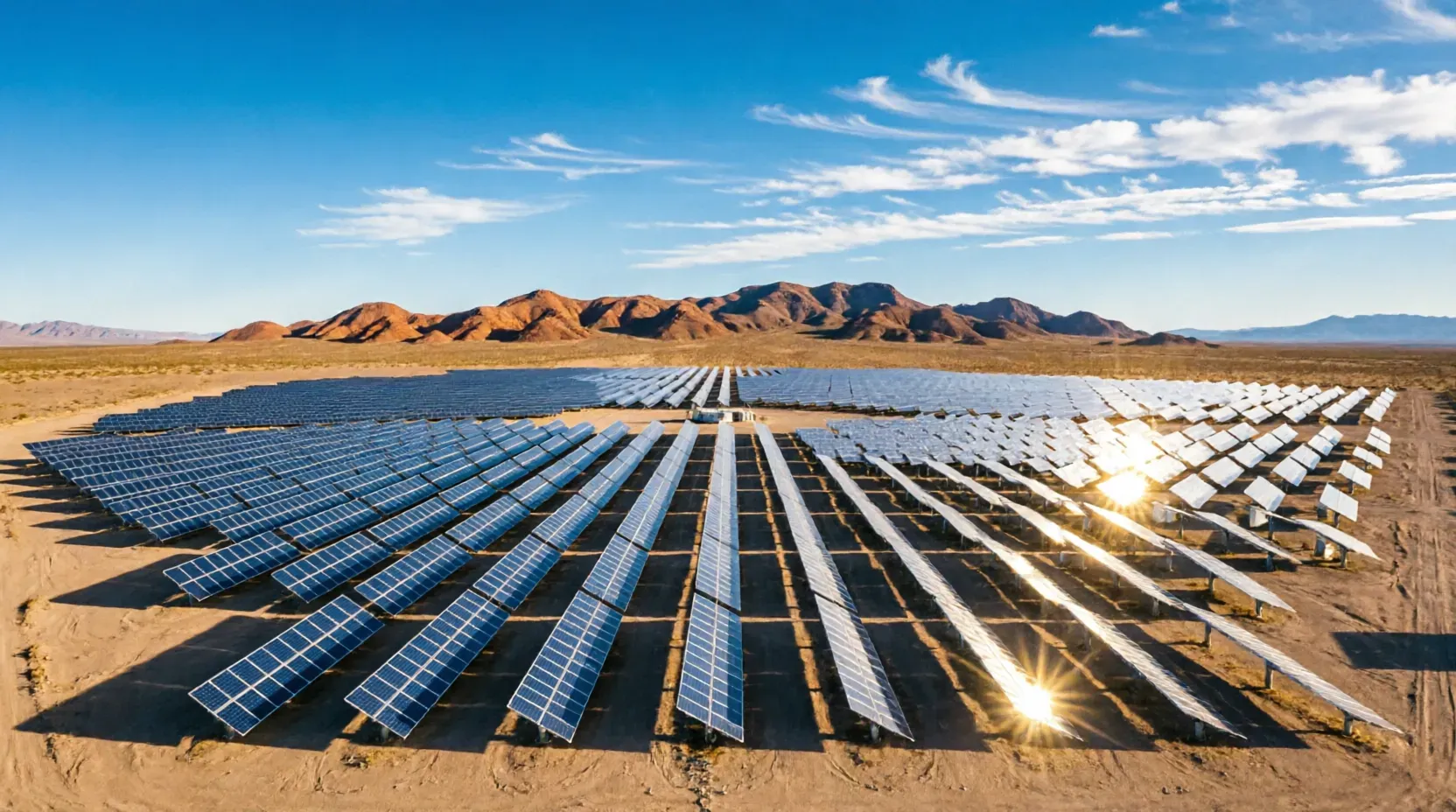
EVelution Energy began physical construction of the solar facility by installing the first permanent steel mounting piles across the 150‑acre site. The piles were placed in their final designed locations under a binding construction contract, using engineering drawings approved by Aquila Energy, the project’s Solar EPC contractor, with integration support from M3 Engineering & Technology Corporation.
The 28 MW solar array will be built in phases, with pile installation, racking, electrical, and civil work scheduled to continue through 2026 and into 2027. Completion of the solar infrastructure precedes the commissioning of the cobalt processing plant, which EVelution expects to reach commercial operation by the end of 2029.
President & CEO Navaid Alam said the work “marks the beginning of the renewable energy system that will power the first cobalt metal and cobalt sulfate processing facility in the United States” and emphasized that the project uses “100% American‑made structural steel, American engineering and American manufacturing.”
Opportunity‑Zone Incentives and Policy Alignment
The Yuma County project is located in a rural Qualified Opportunity Zone, a designation that provides long‑term tax certainty and enhanced incentives for investors under the federal Opportunity Zone program. The census tract is currently being considered for re‑designation by Arizona Governor Katie Hobbs under the next generation of the program, reinforcing the project’s alignment with state‑level economic‑development priorities.
EVelution’s $450 million investment is structured to leverage these incentives, targeting accredited U.S. investors with a minimum $200,000 commitment and foreign accredited investors with a minimum $800,000 commitment. The company also references the EB‑5 Immigrant Investor Program, which can expedite U.S. permanent residency for qualifying foreign investors.
These policy mechanisms are intended to attract capital to critical‑minerals infrastructure while supporting community revitalization in a region identified for long‑term economic development.
Production Capacity and Domestic Demand Outlook
When fully operational, the Yuma County facility will process roughly 24,000 metric tons of cobalt‑hydroxide feedstock each year. The output is projected to include up to 20,000 metric tons of EV‑battery‑grade cobalt sulfate (containing about 4,000 metric tons of cobalt) and up to 3,000 metric tons of alloy‑grade cobalt metal. EVelution estimates that this capacity could satisfy approximately 40 % of projected U.S. cobalt demand, serving aerospace, defense, electric‑vehicle battery, and advanced‑manufacturing sectors.
The company also plans to integrate on‑site battery storage to capture excess solar generation, with any surplus electricity either stored or exported to the local grid. This approach aligns the plant’s energy needs with renewable generation, reducing reliance on external fossil‑fuel‑based power and offering potential grid‑balancing services.
Economic impact projections cite $1.2 billion in annual activity across Arizona and the creation of more than 6,200 direct, indirect, and induced jobs over the project’s life cycle. The emphasis on American‑made steel and domestically sourced equipment further embeds the project within U.S. supply chains.
Key Takeaways
- Construction of a 28 MW solar array began in Yuma County, with full solar build expected through 2026‑2027 and plant commissioning targeted for the end of 2029.
- The $450 million facility will process 24,000 metric tons of cobalt‑hydroxide feedstock annually, aiming to supply up to 40 % of U.S. cobalt demand.
- Located in a Qualified Opportunity Zone, the project leverages federal tax incentives and is under consideration for re‑designation by Arizona’s governor, linking it to broader rural economic‑development goals.
EnergyInsyte's Take
EVelution’s solar‑powered cobalt plant illustrates a concrete effort to couple critical‑minerals processing with renewable energy, potentially easing grid load through on‑site storage and export. Executives should monitor permitting timelines, the availability of American‑made steel, and the evolution of Opportunity Zone policy, as these factors will influence project risk and financing. The plant’s ability to deliver the projected 40 % of domestic cobalt demand remains contingent on feedstock supply and market adoption of its battery‑grade product.
Source: Businesswire