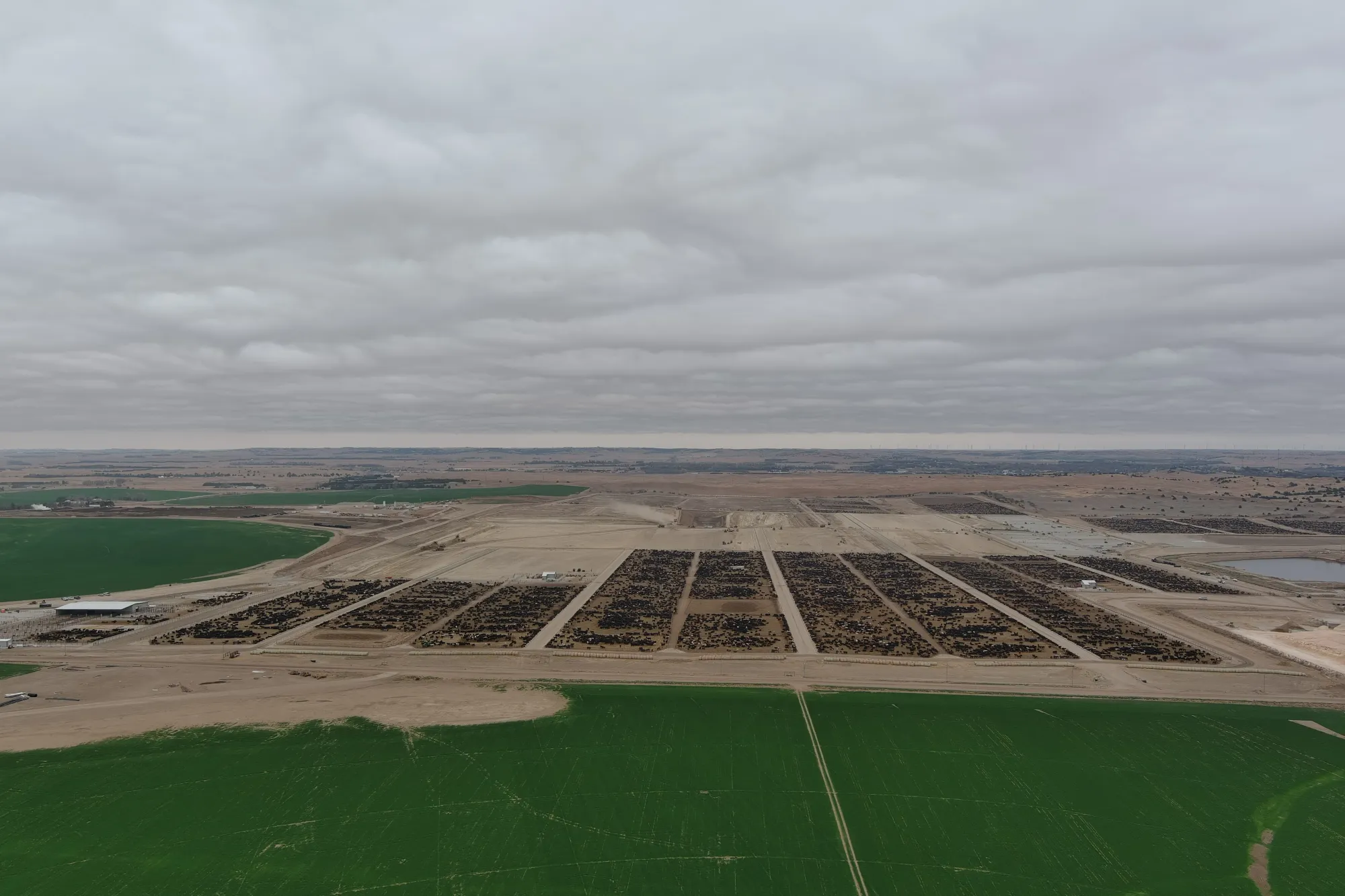
Neogenyx Fuels has commenced construction on its first agricultural renewable natural gas (RNG) facility at the Adams Land & Cattle feedlot in Broken Bow, Nebraska. The project marks a strategic shift for the developer into the agricultural sector, utilizing anaerobic digestion to convert livestock manure into pipeline-quality fuel.
The Announcement
The facility, owned and operated by Neogenyx Fuels, will utilize eight anaerobic digesters to process manure from the Adams Land & Cattle feedlot. The system is designed to generate more than 4,400 standard cubic feet per minute (SCFM) of biogas. This raw biogas will be upgraded into approximately 1.2 million MMBtu per year of RNG for injection into the local natural gas distribution system.
Beyond gas production, the facility will process digestate byproducts. The resulting solids and liquids are slated for onsite reuse as livestock bedding and agricultural fertilizer, creating a circular waste management loop for the feedlot operations.
Why It Matters for the Energy Sector
For energy executives and industrial buyers, this project highlights the scaling of non-electric renewable fuel portfolios. Neogenyx Fuels—a joint venture between energy infrastructure provider Ameresco and sustainable infrastructure investor HASI—now manages a non-electric project portfolio representing more than 13.2 million MMBtu of annual capacity.
The facility is expected to avoid approximately 63,700 metric tons of CO2 emissions annually by capturing methane that would otherwise be released from manure decomposition. For utilities and transportation fleets, this provides a source of low-carbon intensity fuel that utilizes existing pipeline infrastructure, bypassing the immediate need for new long-haul transmission or specialized storage.
Grid, Supply, or Investment Context
The project underscores the economic viability of "behind-the-meter" agricultural waste-to-energy models. By integrating directly with a large-scale feedlot like Adams Land & Cattle, the developer secures a consistent feedstock supply while providing the host facility with operational benefits, such as improved waste handling and reduced environmental liability.
From a capital deployment perspective, the involvement of HASI and Ameresco signals a move toward institutional-grade agricultural RNG projects. These projects are increasingly viewed as reliable infrastructure assets rather than speculative green ventures, supported by the ability to inject fuel directly into existing gas grids and the demand for low-carbon transportation fuels.
What Comes Next
As construction progresses in Broken Bow, the facility will move toward commissioning and eventual injection into the local gas system. Neogenyx Fuels indicated that this project serves as a template for how advanced biofuels can drive investment in rural communities and position the agricultural sector as a domestic energy exporter.
The success of the eight-digester configuration will likely influence future project designs within the Neogenyx portfolio as they seek to scale their 13.2 million MMBtu capacity. Decision-makers should monitor the operational efficiency of this facility as a benchmark for large-scale feedlot integration.
Key Takeaways
- Neogenyx Fuels is constructing its first agricultural RNG plant at the Adams Land & Cattle feedlot in Nebraska.
- The facility will produce 1.2 million MMBtu of pipeline-quality RNG annually using eight anaerobic digesters.
- The project is expected to mitigate 63,700 metric tons of CO2 emissions per year through methane capture.
- Byproducts will be recycled onsite as fertilizer and bedding, enhancing the economic circularity of the feedlot.
EnergyInsyte's Take
This project demonstrates the maturing of the RNG market from niche pilot programs to industrial-scale infrastructure. For grid operators and utilities, the injection of 1.2 million MMBtu per year into local systems provides a steady, baseload-style renewable fuel source that does not suffer from the intermittency of wind or solar. However, the long-term economics for investors will remain tied to the stability of low-carbon fuel standard (LCFS) markets and the continued willingness of industrial buyers to pay a premium for RNG over conventional geologic gas.
Source: Businesswire