VIVIFY Technology announced the release of the Flying Pig™—a 1 MW, containerized hydrogen‑powered system designed for off‑grid use. The company says the unit can be rapidly assembled, connected, and scaled for remote job sites, disaster response, military operations, and other applications where traditional grid access is unavailable or impractical. VIVIFY positions the product as a cost‑effective alternative to conventional grid‑dependent power, citing a five‑year internal cost comparison that projects lower long‑term expenses.
What Happened
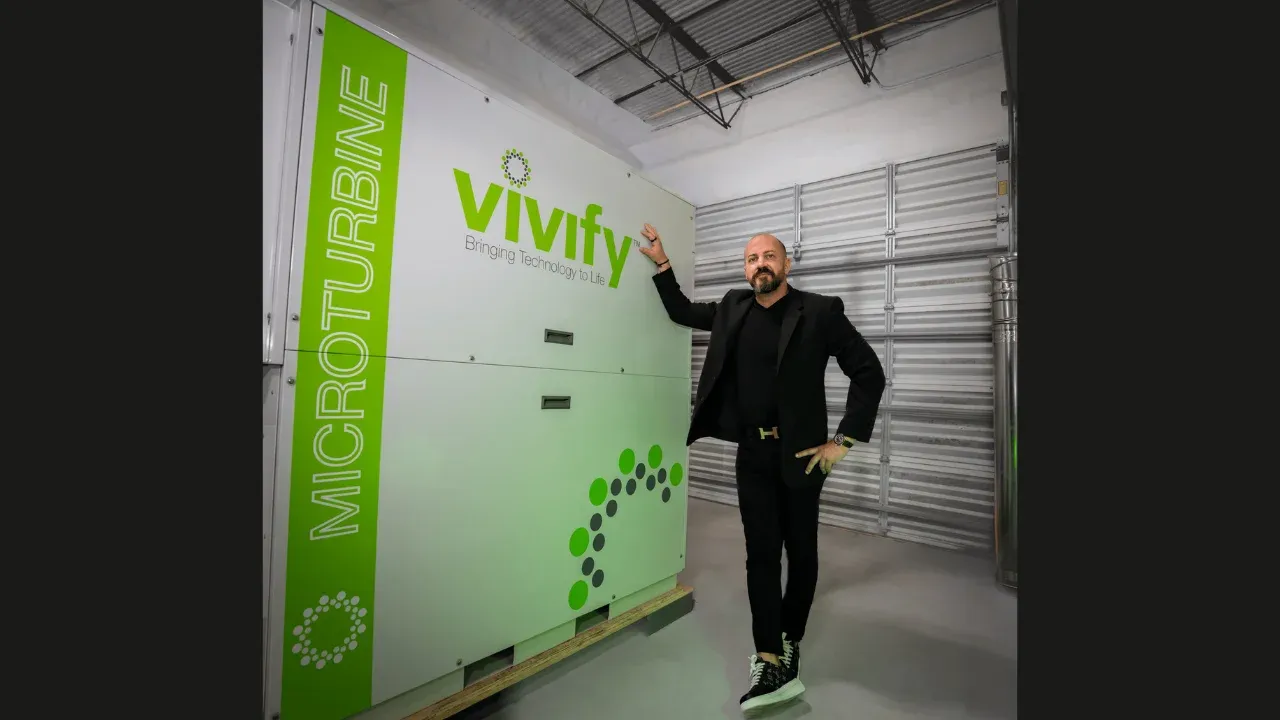
VIVIFY unveiled the Flying Pig™ at an event in the United States, describing it as a “deployable power, built in America.” The system derives from the firm’s flagship HOG™ (Hydrogen Oxygen Generator) platform and incorporates a self‑contained container that houses the hydrogen‑based powertrain. Each unit delivers 1 MW of electricity, with additional capacity achievable by adding modular units. According to founder and CEO Jason Herring, the product “is not a concept, not a promise, and not another piece of energy‑sector theater.” The company did not disclose pricing, production timelines, or the number of units slated for initial delivery.
Project or Policy Context
The Flying Pig™ targets markets where legacy grid infrastructure, centralized fuel supply chains, and “monopoly pricing models” are viewed as constraints. VIVIFY’s announcement aligns with broader industry interest in hydrogen as a flexible energy carrier for remote and resilient power. The company references a five‑year internal cost analysis that shows projected savings versus traditional grid‑connected solutions, though the analysis methodology and assumptions were not disclosed. No regulatory approvals, permitting status, or government partnerships were mentioned in the release.
Market Relevance
For utilities, grid operators, and industrial buyers, the Flying Pig™ represents a potential option for temporary or permanent off‑grid power. The system could be considered for data center backup, disaster‑zone recovery, forward‑deployed military bases, and remote industrial sites where extending transmission lines is cost‑prohibitive. VIVIFY notes that the containerized architecture enables “rapid assembly, fast connection, and modular scaling,” which may appeal to contractors seeking short‑lead‑time power solutions. The company also alludes to longer‑term ambitions, including support for lunar exploration, but provides no concrete roadmap for those applications.
Infrastructure Impact
By housing a hydrogen‑fuelled powertrain in a standard container, the Flying Pig™ aims to reduce dependence on traditional fuel logistics and grid interconnections. VIVIFY claims the unit can operate “at a fraction of the long‑term cost of conventional grid‑dependent power,” citing the removal of supply‑chain dependency and price volatility as key cost drivers. The announcement does not include data on hydrogen storage capacity, refueling requirements, or emissions performance, leaving the full infrastructure implications open for further clarification.
Key Takeaways
- VIVIFY Technology introduced the Flying Pig™, a 1 MW containerized hydrogen power system designed for rapid deployment in off‑grid settings.
- The company’s internal five‑year cost comparison projects the Flying Pig™ will deliver lower long‑term expenses than traditional grid‑connected power, though the analysis details were not disclosed.
- Each unit is modular; additional capacity can be added by stacking modules, and the system is marketed for use in data centers, disaster zones, military operations, remote industrial sites, and future lunar projects.
EnergyInsyte's Take
The Flying Pig™ adds a new, hydrogen‑based option to the growing portfolio of off‑grid power solutions, potentially easing the logistical and cost burdens of extending grid infrastructure to remote locations. However, critical details—such as hydrogen supply logistics, total cost of ownership, and performance metrics—remain undisclosed. Energy executives should monitor VIVIFY’s forthcoming technical specifications and real‑world deployment data to assess whether the system can meet reliability and economic thresholds required for large‑scale, mission‑critical applications.
Source: PR Newswire