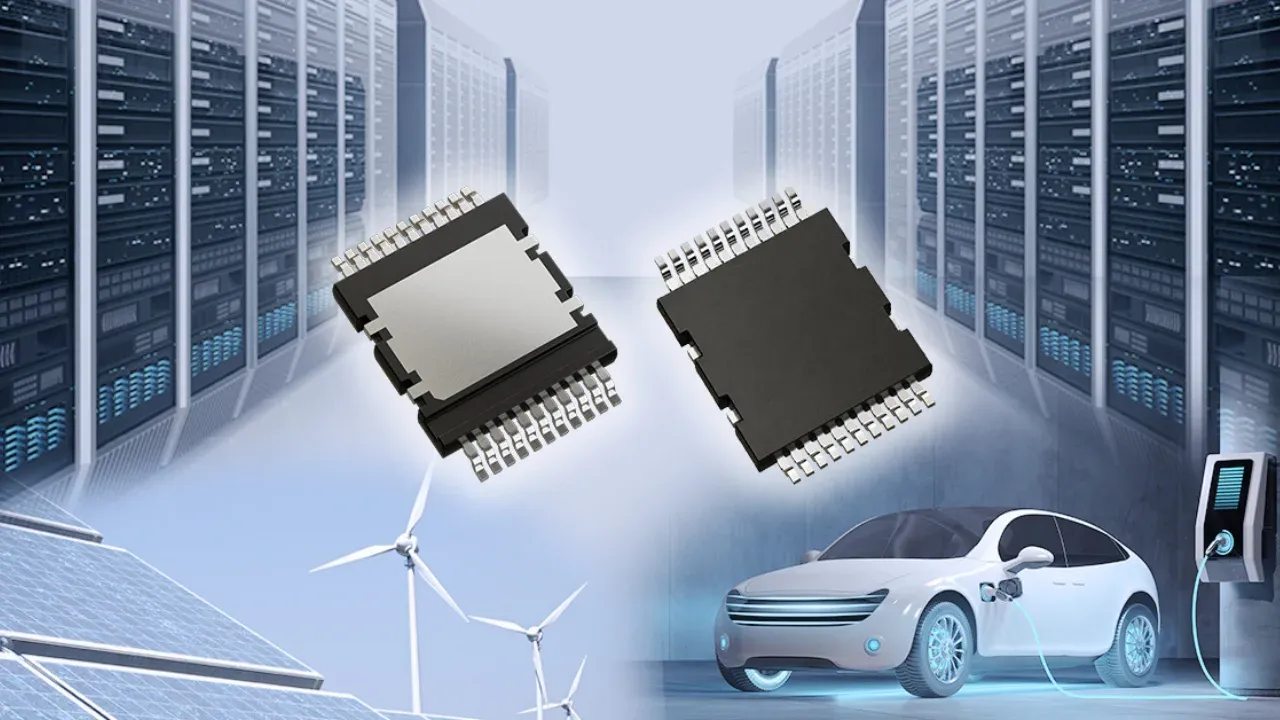

Wolfspeed announced two new 3.3 kV silicon‑carbide (SiC) power‑module families— a high‑power half‑bridge baseplate line and a scalable full‑bridge baseplate‑less line— aimed at grid‑scale converters, solid‑state transformers and AI‑data‑center power supplies. The modules will be showcased at PCIM in June 2026, and samples are already available to select customers through Wolfspeed’s direct sales force. The launch targets engineers who need higher voltage, higher efficiency and smaller footprints as power‑density demands rise across generation, storage and conversion assets.
The Announcement
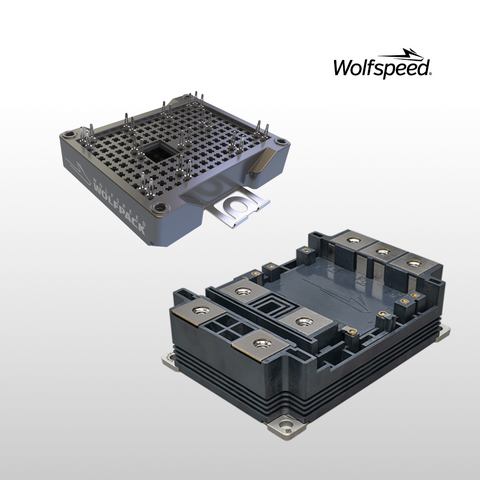
Wolfspeed introduced the two 3.3 kV SiC module families in industry‑standard footprints. The high‑power half‑bridge baseplate module (LM platform) is rated for currents above 800 A and is positioned for solar, grid‑scale storage and wind‑power converters. The full‑bridge baseplate‑less module, part of the Wolfspeed WolfPACK® family, is described as “scalable” for multi‑level, series‑stacked or parallel converter architectures and is optimized for solid‑state transformers (SSTs) and modular renewable‑energy infrastructure.
Both families use “Gen 4” technology with sintered die‑attach and epoxy (or copper die‑top) packaging to improve power‑cycling performance and reduce cosmic‑ray susceptibility. Wolfspeed claims the baseplate module delivers up to a 42 % reduction in switching losses versus competing SiC solutions and more than 90 % versus IGBTs, measured at 125 °C on a 1.8 kV bus in the same package. The WolfPACK® full‑bridge module is said to enable more than a 50 % footprint reduction for SST systems compared with conventional equipment.
Samples of the full‑bridge WolfPACK® IBB020A33GM4, IBB020A33GM4T and the half‑bridge HAB900C33LM4 are available to select customers through Wolfspeed’s direct sales representatives. Demonstrations will occur at PCIM, June 9‑11 2026, booth 7‑435, with live system‑level performance displays.
Why It Matters for the Energy Sector
The 3.3 kV voltage node directly addresses “the rapidly approaching power constraints driven by AI data centers and the broader energy transition,” according to Guy Moxey, vice president of Wolfspeed’s Industrial & Energy business. Higher voltage enables designers to move from multi‑stage converters to a two‑level topology for 2 kV and higher DC‑link architectures, reducing component count and system complexity.
For grid‑scale renewable projects, the half‑bridge module’s >800 A rating supports larger inverter designs, potentially lowering the number of parallel strings required in solar farms or wind‑turbine converters. The full‑bridge, baseplate‑less design offers modularity for SSTs, which are increasingly considered for medium‑voltage distribution and for interfacing renewable generation with legacy AC grids.
Brian Dow, CEO of medium‑voltage SST maker Amperesand, highlighted that the SiC advances “enable maximum reliability for high variability AI factory loads” while delivering “previously unachievable costs and best‑in‑industry power density and efficiency.” He cited a 6 + MW medium‑voltage SST built with the WolfPACK® solution that achieves a 20‑30‑year lifetime and significant space savings.
Reduced switching losses and improved thermal performance also translate into smaller magnetics and EMI filters, which can lower overall system cost and improve power density— key considerations for both utility‑scale converters and data‑center power supplies that operate continuously.
Grid, Supply, and Investment Context
The modules arrive as utilities and developers confront tighter margins on capital deployment while seeking higher efficiency to meet decarbonization targets. SiC’s superior switching characteristics allow converters to operate at higher frequencies, shrinking magnetic components and enabling more compact substations or offshore platforms.
Wolfspeed’s claim of a 42 % switching‑loss advantage over other market‑available SiC parts suggests a competitive edge in applications where loss‑related heat management drives balance‑of‑plant costs. The cited >90 % advantage over IGBTs reinforces the ongoing industry shift from silicon to wide‑bandgap devices for high‑voltage, high‑current converters.
The availability of both baseplate and baseplate‑less footprints gives system integrators flexibility to select packaging that matches existing mechanical designs or to adopt newer modular architectures without redesigning the entire power stage. This could shorten engineering cycles for projects under tight permitting timelines.
Wolfspeed’s direct‑sales sample program indicates an early‑adopter strategy, allowing key customers to validate performance before larger volume commitments. Demonstrations at PCIM—a major power‑electronics trade show—signal an intent to generate market traction among grid operators, OEMs and data‑center designers.
What Comes Next
Wolfspeed will continue to field the 3.3 kV modules through its sales network, with the first commercial shipments expected later in 2026 pending customer qualification. The company has not disclosed a full production roadmap or pricing structure.
Potential adopters will need to assess integration requirements, such as thermal‑interface materials compatible with the sintered die‑attach and the mechanical tolerances of the industry‑standard footprints. Compatibility with existing control‑software and protection schemes for higher‑voltage DC links will also be a focus for engineering teams.
Stakeholders should monitor the outcomes of the PCIM demonstrations, particularly any disclosed performance data on system‑level efficiency, thermal behavior and reliability under continuous 24/7 operation. Follow‑up announcements may clarify volume targets, supply‑chain readiness and any partnerships with inverter or transformer manufacturers.
Key Takeaways
- Wolfspeed introduced two 3.3 kV SiC module families—a >800 A half‑bridge baseplate line and a scalable full‑bridge baseplate‑less line—available to select customers now.
- The baseplate module claims up to 42 % lower switching losses than competing SiC parts and more than 90 % versus IGBTs, measured at 125 °C on a 1.8 kV bus.
- Demonstrations of both families will be held at PCIM, June 9‑11 2026, booth 7‑435, with live system‑level performance displays.
EnergyInsyte's Take
Wolfspeed’s 3.3 kV SiC modules give grid and data‑center engineers a higher‑voltage, higher‑efficiency building block that could simplify converter topologies and shrink equipment footprints. The real impact will depend on how quickly customers can qualify the parts and integrate them into existing designs, especially given the stringent reliability demands of 24/7 infrastructure. Executives should watch the PCIM demo results and any forthcoming supply‑chain updates to gauge the timing of broader adoption.
Source: Businesswire